
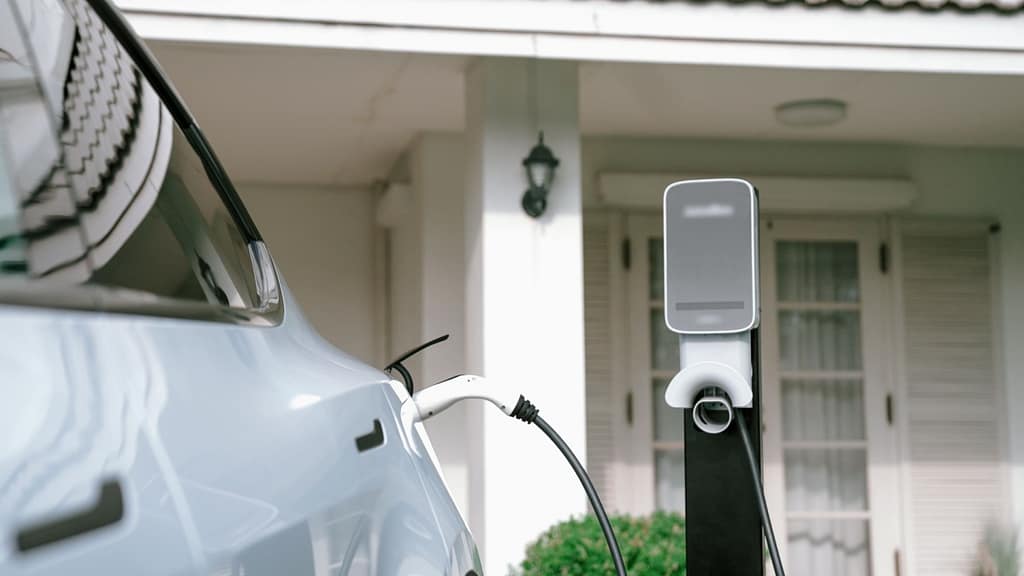
The conversation around EV infrastructure almost always gravitates towards public charging systems — more stations, faster speeds, better coverage along highways. That conversation is important. But it misses the bigger bottleneck completely. Roughly 80% of EV charging happens at home, and about a third of Americans live in multifamily housing. Do the math: only 5% of the U.S. apartment buildings currently offer on-site EV charging. For environmental engineer Benjamin Zev, whose research began with multifamily properties and student housing, this gap is where the real infrastructure problem lives, not at the curb, but in the building itself.
The Numbers That Define the Problem
The mismatch between EV adoption and charging access in multifamily housing is stark:
- Only 5% of U.S. multifamily properties offer on-site EV charging
- Between 84% and 94% of EV drivers in single-family homes can charge at home — compared to less than half of apartment tenants
- 31% of renters who don’t yet own an EV cite the absence of home charging as a primary reason they haven’t made the switch
- Nearly one-third of renters — roughly 79 million adults — live in multifamily housing, making this the single largest underserved segment in EV adoption
EV adoption isn’t hitting a ceiling because people don’t want electric vehicles. It’s hitting a wall because the buildings people live in aren’t equipped to support them.
The Cost Case for Acting Now
Waiting is expensive. Installing EV charging during new construction or a planned renovation costs three to five times less than retrofitting later. A single Level 2 charger at an older multifamily property can run $5,000 to $15,000 per port once wiring, panel upgrades, and concrete work are factored in. California estimated it will save up to $1.4 billion statewide simply by requiring EV-ready infrastructure in new construction rather than patching it in after the fact.
The smart move isn’t necessarily installing chargers everywhere today. It’s running the conduit, upgrading the panel, and pre-wiring parking spaces now — what the industry calls “make-ready” infrastructure. When demand arrives, it’ll be much easier to add chargers.
What Renters Are Already Demanding
This is no longer a question of catering to a niche demographic. Renter demand for EV charging has climbed from the high 20% range to roughly one-third of renters in recent surveys, and tenants with charging access are more than twice as likely to plan on owning an EV within five years. In a National Multifamily Housing Council survey, 58% of renters interested in EVs said they’d pay more in monthly rent for access to on-site charging — with respondents indicating a willingness to pay around $28 more per month.
Listings featuring EV charging were posted 91.6% more often in 2025 versus 2024. Properties without charging are increasingly being filtered out of renter searches entirely before a tour is ever scheduled.
Benjamin Zev has observed this shift as a direct extension of the broader sustainability-driven tenant expectations he studied early in his career — the same way energy-efficient buildings and green certifications transitioned from differentiators to baseline expectations, EV charging is following the same path.
Building Codes Are Catching Up
As of January 2026, California requires new multifamily developments to include at least one EV-ready parking spot per unit. Twelve jurisdictions and 53 local governments have added EV provisions to their building codes, including Oregon, Washington, Colorado, Illinois, Maryland, New Jersey, and Massachusetts.
For property owners in areas without mandates yet, the window to get ahead of requirements is narrowing.
EV infrastructure is a real estate problem before it’s a transportation problem. Buildings that aren’t wired for the next generation of tenants aren’t standing still. They’re falling behind.
Leave a Reply